
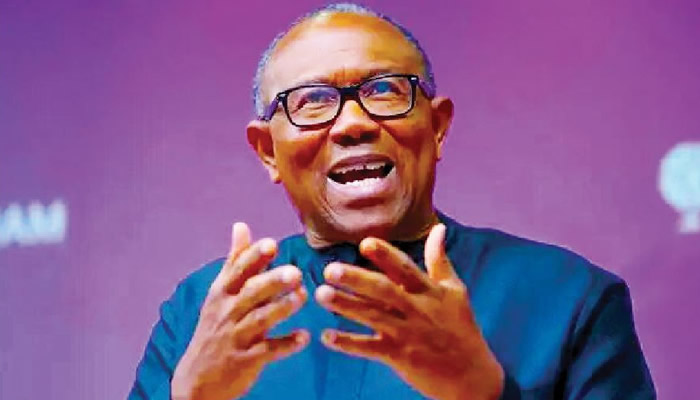
Peter Obi, the 2023 Labour Party presidential candidate, has voiced strong concerns over Nigeria’s latest power grid collapse, which has once again plunged large parts of the country into darkness.
The national electricity grid collapsed on Monday evening at approximately 6:18 PM. Power generation dropped significantly, falling from 3.87 gigawatts at 5 PM to 3.56 GW by 6 PM and plummeting to zero at 7 PM and 8 PM. The Enugu Electricity Distribution Company confirmed the grid’s collapse in an official statement.
In a post on X on Tuesday, Obi described the incident as a national shame, highlighting it as evidence of failures in leadership and policy implementation at the highest levels.
“For the umpteenth time, the national grid has collapsed, plunging a huge part of the nation into darkness and exposing the fragility of Nigeria’s power infrastructure,” Obi stated. “This recurring disaster is a glaring testament to the failure of leadership and policy implementation.”
He emphasized that repeated power failures pose significant obstacles to the nation’s growth and economic stability. According to Obi, these occurrences underscore the urgent need for substantial reforms in the energy sector.
He pointed out the economic impact of unreliable power supply, particularly on small and medium-sized enterprises (SMEs). “How long must Nigerians endure a system that fails to provide one of the critical necessities for a productive society?” he asked. “This latest power grid collapse is emblematic of a leadership and government that have consistently failed to prioritize the welfare and economic well-being of the people.”
Obi stressed the importance of consistent power supply for economic transformation. He noted that SMEs, which are vital for job creation and contribute significantly to the GDP, suffer greatly from power outages.
Additionally, Obi criticized the disparity between Nigeria’s power generation capacity and that of other African nations, such as South Africa, Egypt, and Algeria. “Today, we are the fourth-largest economy in Africa, having fallen from the number one position due to leadership failure, including the persistent power crisis,” he said. “The disparity in power generation reflects the deep-rooted governance deficit that continues to hinder our growth and potential.”
Obi called for urgent, comprehensive reforms in Nigeria’s power sector and urged the government to prioritize initiatives that drive measurable development. “Nigerians deserve a government that prioritizes measurable indices of development,” he concluded.