
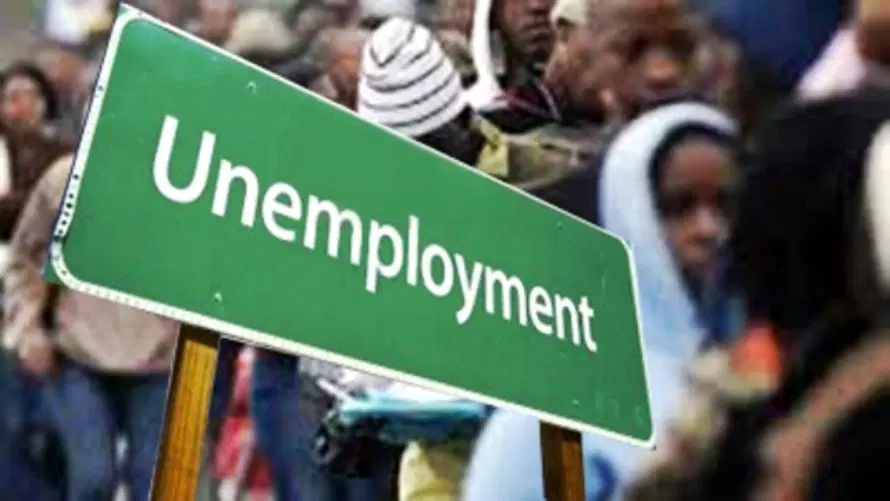
Professor Emeka Okafor, a leading scholar in Industrial Sociology at the University of Ibadan, has highlighted the troubling correlation between Nigeria’s high unemployment rates and the exploitation of workers, particularly non-standard employees. His remarks were made during his inaugural lecture at the university, titled “The Periphery of the Periphery: Exploring the Experiences of Non-Standard Workers.”
Proliferation of Cheap Labor
In his presentation, Professor Okafor pointed out that the persistent unemployment crisis in Nigeria has created a surplus of cheap labor, which organizations across various sectors exploit. He noted that non-standard workers, such as casual employees, are especially vulnerable due to their precarious employment status.
“These workers find themselves marginalized and exploited by employers, supervisors, and even regular employees within the organizational framework,” he explained, emphasizing the systemic issues that allow such exploitation to persist.
Barriers to Unionization
A significant factor contributing to the exploitation of non-standard workers is their inability to join trade unions, which limits their capacity to negotiate for better working conditions and fair wages. Professor Okafor argued that this lack of representation leaves these workers exposed to severe and unstable working conditions.
“The inability of non-standard workers to join trade unions hampers their capacity to negotiate for better working conditions, including fair pay,” he stated. He further noted that these workers are often denied access to essential rights, leading to the unattainability of decent work—a concept advocated by the International Labour Organisation (ILO).
Government Intervention Needed
To combat these challenges, Professor Okafor urged both federal and state governments to enforce labor laws designed to protect workers from exploitation. He called on the Nigerian government, as the largest single employer of labor, to ensure rigorous enforcement of labor standards and regulations that safeguard workers’ rights.
He proposed that the government should regularize non-standard workers within ministries, departments, agencies, and parastatals, providing them with stable employment and career advancement opportunities. This approach, he argued, could serve as a model for other stakeholders.
Economic Reforms and Job Creation
In addition to enforcing labor laws, Professor Okafor emphasized the need for creative job generation and economic reforms aimed at revitalizing the economy and attracting investment. He also called for strengthening labor inspection mechanisms to ensure compliance with safety standards and provide timely compensation for workplace injuries and fatalities.
He advised the Ministry of Labour and Employment to actively safeguard workers’ rights and ensure occupational safety through the enforcement of existing labor laws. Regular workplace inspections should be conducted to identify safety violations and combat corruption within the Inspectorate Department, which can allow unscrupulous employers to bypass regulations affecting non-standard workers.
Role of Labor Unions
Professor Okafor concluded by asserting that labor unions must exert pressure on employers to regularize non-standard workers and improve their working conditions through collective bargaining agreements. He emphasized the crucial role of these unions in advocating for the rights and welfare of vulnerable workers in Nigeria.
In summary, the interplay between high unemployment rates and worker exploitation highlights a critical issue that requires immediate attention from both government and private sectors. By implementing reforms and enforcing labor laws, Nigeria can create a fairer and more equitable work environment for all its citizens.