
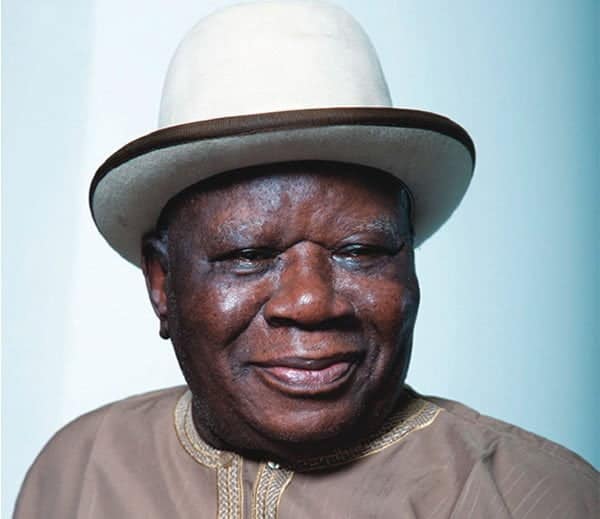
Chief Edwin Clark, a prominent Niger Delta elder and chieftain of the Pan Niger Delta Forum (PANDEF), has called for a comprehensive investigation into what he describes as the “misuse of oaths” by members of the Rivers State House of Assembly. The lawmakers in question, led by Martins Amawhule, are accused of making contradictory statements regarding their political loyalties, particularly after they defected from the Peoples Democratic Party (PDP) to the All Progressives Congress (APC) in December 2023.
In a statement released on Wednesday, Clark expressed concern over the apparent inconsistencies in the declarations made by the defecting lawmakers, some of whom allegedly gave conflicting testimonies about their party affiliations under oath. He emphasized that these contradictions raise serious questions about the integrity of the lawmakers’ actions and undermine the legitimacy of their positions in the assembly.
“The actions of Amawhule and his colleagues are not only politically questionable but legally dubious,” Clark stated. “They have made contradictory oaths of allegiance, at times professing loyalty to the PDP and at other times aligning with the APC, without proper explanation for the shift. This is a grave issue that requires immediate attention by law enforcement authorities.”
Clark’s accusations stem from a broader concern that the defecting lawmakers’ actions violate the Nigerian Constitution, specifically Section 109(1)(g), which mandates that any lawmaker who switches political parties without just cause should forfeit their seat. The mass defection of Amawhule and 26 other members of the Rivers State House of Assembly from the PDP to the APC in December 2023 has, according to Clark, led to a situation where these lawmakers should have vacated their positions in line with constitutional provisions.
Court Rulings Under Scrutiny
The situation has been further complicated by recent court rulings that Clark has described as “obtained by fraud.” One such ruling came from Justice James Omotoso in January 2024, which Clark claims failed to address the constitutional implications of the lawmakers’ party defections. According to Clark, Justice Omotoso’s decision ignored the constitutional requirement that lawmakers who defect without valid reasons must lose their seats, thus allowing the defectors to remain in office.
Another point of contention is the decision by Justice Okorowo, who, Clark alleges, blocked the Independent National Electoral Commission (INEC) from initiating the process to replace the defected lawmakers. This ruling, Clark points out, was issued shortly before Justice Okorowo’s promotion to the Court of Appeal, a timing he finds suspicious. He has raised concerns that the ruling may have been politically motivated to benefit the defecting lawmakers, further fueling doubts about the integrity of the judicial process in the state.
“These court decisions appear to be part of a coordinated effort to subvert the law and allow the defectors to retain their seats,” Clark added. “We must not allow such actions to go unchecked, as they undermine the very foundation of our democracy.”
Political Implications and Broader Concerns
Clark’s call for an investigation highlights the deepening political crisis in Rivers State, which has seen increasing tensions following the defection of these lawmakers. The defections, which saw several key members of the state assembly abandon the PDP and align with the APC, have raised questions about the political stability in the state, particularly with the ongoing influence of former Governor Nyesom Wike, a dominant figure in the state’s political landscape.
Clark, a long-time critic of Wike’s political strategies, believes that the defections are part of a larger effort to manipulate political power in Rivers, with the potential for far-reaching consequences for governance in the state. He fears that if the situation is not properly addressed, it could set a dangerous precedent for future political maneuvering in the country.
The controversy also shines a light on the role of the judiciary in Nigerian politics, especially regarding the interpretation and enforcement of the law in politically charged cases. Clark’s statement suggests that the current legal outcomes in Rivers State are not only questionable in their fairness but may be part of a broader attempt to influence political outcomes through the judicial process.
Next Steps and Political Fallout
As the matter unfolds, Clark is calling for a full investigation by law enforcement agencies to determine the legality of the defections and the actions of the lawmakers involved. He has also called for scrutiny of the judicial decisions that have allowed the defectors to remain in office.
These developments come at a time of heightened political tensions in Rivers State, with the shift in party loyalty among lawmakers and the ongoing political influence of former Governor Nyesom Wike contributing to an already volatile environment. As the state grapples with these controversies, the broader implications for Nigeria’s political and judicial systems remain significant.
Clark’s call for a transparent investigation suggests that he believes the political order in Rivers State is being undermined by illegal and unethical actions, and he is pushing for greater accountability at both the legislative and judicial levels.