
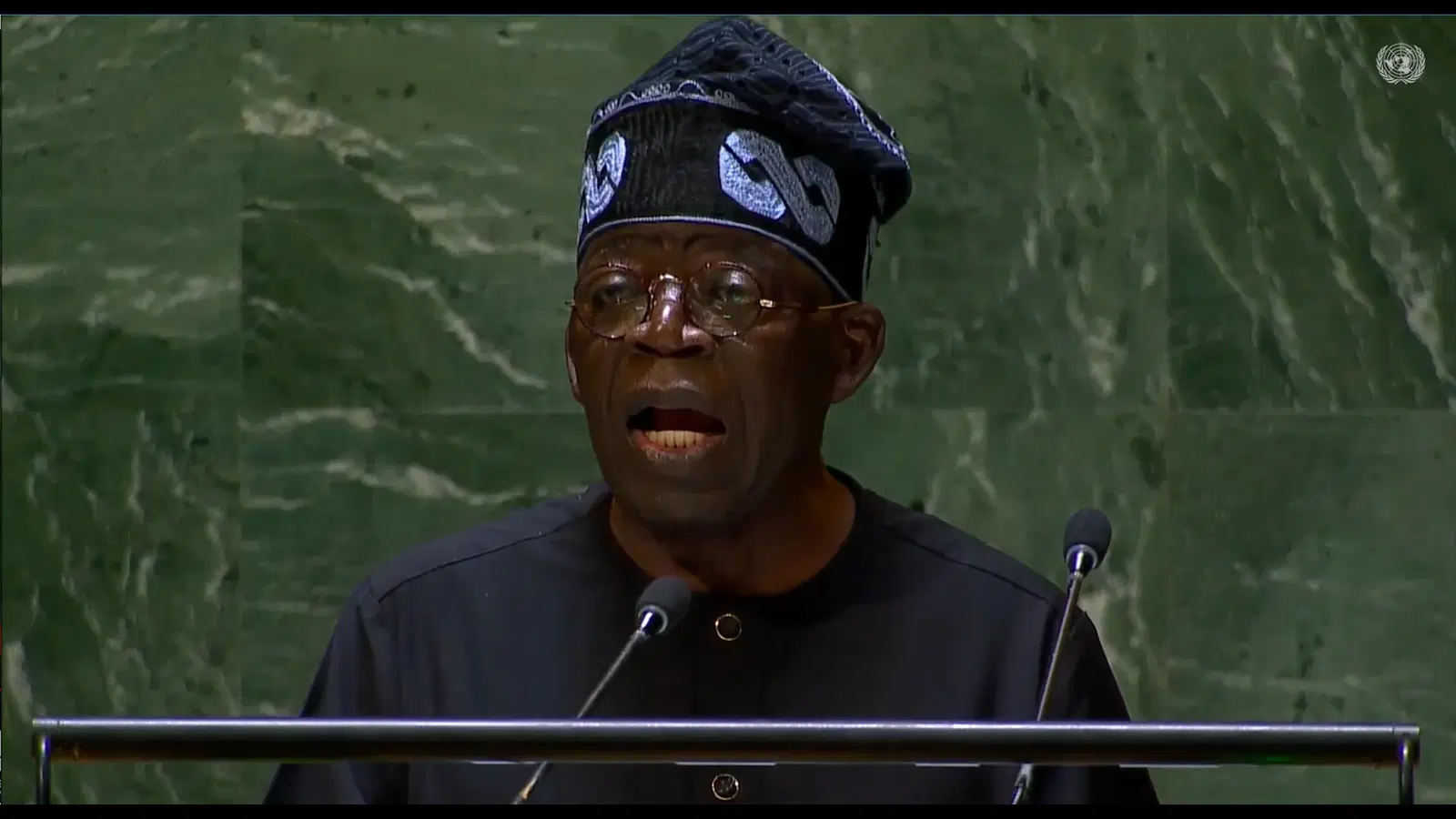
At the 79th United Nations General Assembly in New York, Nigeria firmly reiterated its demand for a permanent seat on the UN Security Council, emphasizing its substantial contributions to global peacekeeping. Minister of Defence Mohammed Badaru addressed the assembly, highlighting Nigeria’s involvement in 41 peacekeeping missions and the deployment of over 200,000 troops since its first mission in Congo in 1960.
In his speech during the interactive dialogue themed “Enhancing Multilateralism for International Peace and Security,” Badaru underscored Nigeria’s commitment to international peace and security. He stated, “Since our first deployment in the Congo in 1960, Nigeria has contributed to 41 peacekeeping missions globally,” showcasing the nation’s proactive role in various regions, including Côte d’Ivoire, Guinea-Bissau, The Gambia, Liberia, Mali, Sudan, and Sierra Leone.
Badaru argued that the Security Council must be reformed to include permanent representation for Africa, which he believes is essential for fostering global stability and inclusivity. He stressed, “It is on this basis that Nigeria continues to call for the reform of the United Nations Security Council to give just representation to Africa permanently for inclusivity and deepening of global peace and security.”
The Minister also highlighted the urgent need for building professional African armies to combat terrorism and advocated for the operationalization of the African Standby Force (ASF). He called for comprehensive strategies to address transnational crime and illegal arms trafficking, particularly in the Sahel region. “Nigeria calls for the operationalization of the African Standby Force and the provision of requisite support and resources to ensure its effectiveness,” he stated.
Badaru also drew attention to the alarming rise in organized crime, emphasizing the need for prevention and early detection strategies, especially in light of the emerging alliances between bandits and terrorists. He warned of the implications of unrestricted access to small arms by non-state actors, which exacerbates insecurity across the region.
“We must scale up efforts to address transnational organized crime and illegal financial flows,” he urged, pointing out the urgent need for coordinated international action against the proliferation of small arms and light weapons.
In conclusion, Badaru reaffirmed Nigeria’s commitment to supporting UN initiatives aimed at combating terrorism and promoting global peace, stressing the importance of collaborative efforts to address the complex challenges of insecurity and instability facing the region.