
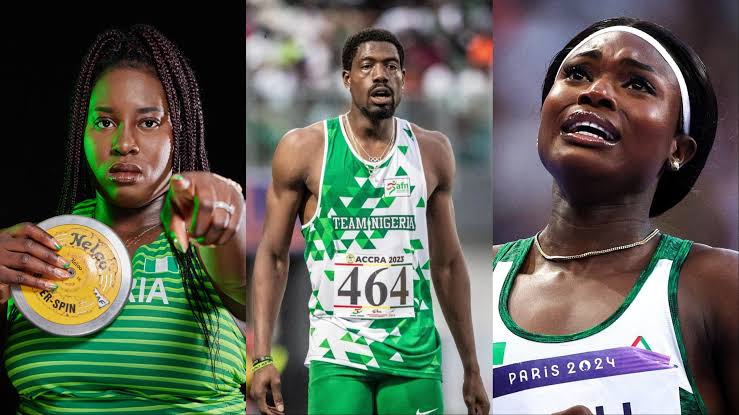
As Nigeria celebrates its 64th Independence Day on October 1, 2024, the sporting sector reflects a year filled with both triumphs and setbacks. From remarkable achievements in international competitions to disappointing performances, the country has experienced a mixture of highs and lows in its sports landscape over the past 365 days (October 1, 2023, to October 1, 2024). Below is an overview of the key moments in Nigeria’s sports during this period.
Highs in Nigeria’s Sports
- Under-19 Women’s Cricket Team World Cup Qualification
- The Nigerian Under-19 Women’s Cricket team made history by qualifying for the World Cup for the second time. This achievement highlights the growing influence of cricket in Nigeria, which continues to gain recognition on the global stage.
- Team Nigeria’s Performance at the 2024 Paris Paralympics
- Nigeria’s Paralympic athletes once again shone brightly, securing a total of seven medals at the 2024 Paris Paralympics. This continues Nigeria’s impressive track record in Paralympic sports, where athletes consistently defy the odds and represent the country with distinction.
- Elizabeth Oshoba’s Historic Boxing Win
- UK-based Nigerian boxer Elizabeth Oshoba made history by becoming the first female Nigerian boxer to win a world title. Her achievement marked a significant milestone for women in Nigerian sports, demonstrating the country’s growing presence in international boxing.
- Ademola Lookman’s Stellar Performance
- Ademola Lookman, who plays for Atalanta, made headlines with his outstanding performance at the 2023 AFCON and his historic hat-trick in the 2024 Europa League final, securing the title for his club. Lookman was the only African outfield player nominated for the 2024 Ballon d’Or, showcasing his remarkable form over the past year.
- Victor Osimhen and Asisat Oshoala’s African Player of the Year Wins
- In December 2023, Victor Osimhen and Asisat Oshoala were crowned the men’s and women’s African Player of the Year, respectively. This recognition of their talent and contribution to football underscored Nigeria’s dominance in the sport, both on the men’s and women’s sides.
- Nigeria’s Second-Place Finish at 2023 AFCON
- Nigeria’s senior national football team, the Super Eagles, finished as runners-up in the 2023 Africa Cup of Nations (AFCON) in Ivory Coast. Defender William Troost-Ekong was named the Player of the Tournament, adding to Nigeria’s pride despite missing out on the title.
Lows in Nigeria’s Sports
- Nigeria’s Disappointing Paris 2024 Olympics
- Despite sending an 88-member contingent to the Paris 2024 Olympics, Team Nigeria failed to win any medals. This marks one of the worst Olympic performances for Nigeria post-Independence, raising questions about the country’s preparation and investment in Olympic sports.
- Favour Ofili’s Olympic Disappointment
- Sprinter Favour Ofili, who qualified for the 2024 Olympics, faced a bitter exclusion from the women’s 100m event, mirroring her previous disqualification from the Tokyo 2020 Games. Her absence from the competition was a significant blow to Nigeria’s track and field aspirations.
- Underutilization of Nigerian Stadiums
- Despite having numerous large stadiums, Nigeria’s stadiums remain largely underutilized. Only the Godswill Akpabio Stadium in Uyo meets the Confederation of African Football (CAF) standards for international matches from 2023 to 2024. This underutilization reflects a missed opportunity for sports development within the country.
- Struggles of Nigeria’s Under-17 Football Team
- Nigeria, once a powerhouse in Under-17 football, has struggled to maintain its dominance. The Golden Eaglets failed to qualify for both the 2023 and 2025 Under-17 World Cups after a poor showing at the WAFU B tournament. This decline marks a significant downturn for a team that once set the standard for youth football globally.
- Doping Bans Tarnish Nigerian Sports
- Nigerian athletes have faced a series of doping violations in recent years, with sprinter Divine Oduduru and boxer Cynthia Ogunseilore being recent examples. Oduduru received a six-year ban for multiple anti-doping rule violations, while Ogunseilore faced a ban for similar offenses. These incidents have cast a shadow over Nigeria’s athletic achievements and emphasize the need for stricter anti-doping measures.
Conclusion
Over the past year, Nigeria has experienced both moments of glory and significant setbacks in its sporting sector. While achievements in cricket, boxing, football, and the Paralympics demonstrate the country’s potential, the challenges at the Olympics, stadium underutilization, and doping scandals highlight areas that require urgent attention. As the country moves forward, these highs and lows serve as a reminder of the continuous work needed to elevate Nigeria’s sports to the next level.