
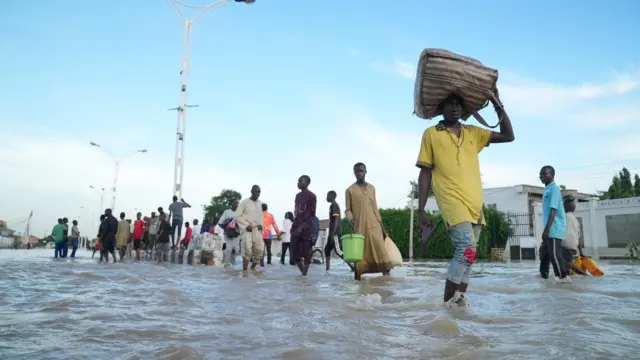
Panic has engulfed residents of Nigeria’s littoral states as the release of excess water from Cameroon’s Lagdo Dam begins. Following torrential rains and the recent collapse of the Alau Dam in Maiduguri, citizens in flood-prone areas are bracing for potential disaster. The Nigeria Hydrological Services Agency (NIHSA) warned on September 17, 2024, of severe flooding expected to impact approximately 11 states as a result of the water release from Lagdo Dam.
Affected States and Warning from NIHSA
States bordering the Benue River—Adamawa, Taraba, Benue, Nasarawa, Kogi, Edo, Delta, Anambra, Bayelsa, Cross-River, and Rivers—are predicted to face significant flooding risks. NIHSA has urged residents and officials at all levels of government to heighten vigilance and take immediate steps to mitigate the potential impact of rising river levels.
In a statement signed by NIHSA Director-General Umar Muhammed, the agency revealed that Cameroon began releasing water at a rate of 100 cubic meters per second (8,640,000 cubic meters per day) starting September 17, 2024. The discharge is expected to increase to 1,000 cubic meters per second within a week due to upstream inflows from the Garoua River, which feeds the Benue River.
On September 19, NIHSA issued a follow-up warning, advising those living in floodplains to evacuate to safer areas as the release continues.
Heightened Fear and Government Response
This warning has triggered widespread anxiety across the affected states. From the northern regions of Adamawa and Taraba to the southern parts of Bayelsa and Rivers, there is palpable fear of catastrophic flooding. State governments and federal agencies are racing to put flood control measures in place, but challenges remain. Many residents in vulnerable floodplains are refusing to relocate despite warnings, complicating government efforts.
Ezekiel Manzo, spokesperson for the National Emergency Management Agency (NEMA), confirmed the gradual release of water from the Lagdo Dam. He explained that controlled releases are necessary to prevent the dam from being overwhelmed, which could lead to even greater devastation. “A breakage of the dam would cause much more damage, as we saw with the Alau Dam in Maiduguri,” he warned. NEMA has also activated emergency protocols, with state offices and local authorities on alert.
Northern States: Apprehension Mounts
In the northern states, particularly Adamawa and Taraba, which share a border with Cameroon, the mood is tense. Residents are on edge, fearing a repeat of previous flood disasters. In Adamawa’s northern senatorial zone, which includes Yola and Michika, floods have already claimed 12 lives, displaced over 30,000 people, and caused millions of naira in property damage, even before the full effects of the Lagdo water release have been felt.
In Adamawa, many residents are reluctant to leave their homes, with some citing cultural taboos against relocating. Despite this, NEMA and local authorities are continuing efforts to urge people to move to safer areas.
Benue: Government on High Alert
In Benue State, where the Benue River runs through key flood-prone communities, the government has placed residents on red alert. With a history of devastating floods from water releases, the state is taking proactive steps to prevent tragedy. A State Technical Committee on Flooding Preparedness has been set up to coordinate with the State Emergency Management Agency (SEMA) and other partners.
The Benue State government has begun preparing shelters and evacuation plans for communities along the river, such as Apa, Agatu, Guma, and Makurdi. Commissioner for Education, Dr. Frederick Ikyaan, who leads the flood preparedness efforts, assured that the government has sufficient resources to respond to any incidents. “So far, what we have on the ground is enough to accommodate whatever degree of incidents that we may record,” he said.
Governor Hyacinth Alia added that the government has carried out thorough sensitization of riverbank residents but acknowledged that some individuals are still refusing to leave the floodplains. “Despite warnings, we will persist in encouraging them to move to higher ground for their safety,” he said.
Preparing for the Worst
As the release of water from the Lagdo Dam continues, state governments and disaster management agencies remain on high alert. The hope is that flood control measures, evacuation efforts, and continuous monitoring will reduce the impact of the flooding, but the situation remains dire. Many communities are preparing for the worst, while authorities work tirelessly to mitigate the looming disaster.