
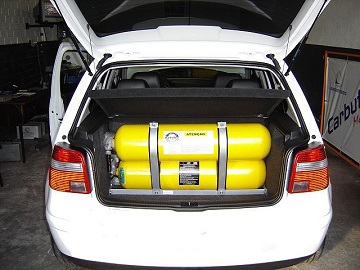
Automobile experts have highlighted the significant savings and environmental benefits of using Compressed Natural Gas (CNG) in vehicles compared to Premium Motor Spirit (PMS), also known as petrol. In separate interviews with the News Agency of Nigeria (NAN) in Abuja, they asserted that cars running on CNG save up to 70% on maintenance and operational costs.
Cost Efficiency and Environmental Benefits
The Director-General of the Nigerian Institute of Transport Technology (NITT), Mr. Bayero Farah, explained that CNG-powered cars not only save 70% in running expenses but also improve engine performance, extend service life, and produce emissions that meet international standards. Farah noted that CNG offers stable pricing as it is less affected by exchange rates and production challenges that often impact petrol and diesel prices.
“CNG will maintain a stable price because it is not dependent on exchange rates or production issues, unlike PMS and diesel,” Farah said. However, he acknowledged that the high initial cost of converting petrol vehicles to CNG remains a drawback, alongside the limited availability of gas refueling stations and trained technicians for maintenance.
To address these challenges, Farah emphasized that the Nigerian government, through the Presidential CNG Initiative (PCNGI) and NITT, is working to establish conversion centers and provide technical training for vehicle maintenance across the country. “NITT is committed to building the technical workforce needed to support the CNG value chain,” he added.
Reduced Engine Wear and Lower Emissions
Mr. Oseni Suleiman, National President of the Amalgamated Union of Motor Mechanics and Technicians (AUMMTON), echoed Farah’s statements, explaining that CNG-powered cars guarantee lower maintenance costs than their petrol counterparts. He emphasized that CNG burns more cleanly, reducing engine wear and minimizing emissions. This makes CNG a cheaper and cleaner fuel alternative.
“CNG is cost-effective, as it burns more slowly and produces fewer emissions compared to petrol,” Suleiman stated. However, he noted the limited number of CNG refueling stations in Nigeria, which discourages widespread adoption despite its advantages.
Suleiman also pointed out that petrol quality in Nigeria has declined due to frequent adulteration, leading to quicker emissions and loss of engine power. He highlighted the importance of training more Nigerian technicians in CNG conversion to facilitate the transition to this alternative fuel.
Rising Demand for CNG Vehicles
Julius David, CEO of Prince Autos in Abuja, confirmed that many customers are now opting for CNG vehicles due to the increasing unpredictability of the petrol market. “CNG is cheaper, more abundant, and requires less maintenance than petrol or diesel vehicles,” David said. He also noted that CNG produces fewer greenhouse gas emissions, making it an environmentally friendly option.
Several CNG vehicle owners also attested to the cost-effectiveness of their cars. Joseph Oluebube, a CNG car owner, shared that while initially hesitant due to the lack of CNG refueling stations, he now enjoys the benefits. “If I fill the cylinder for N4,000, it lasts more than a week, and I commute daily from Kubwa to Garki,” Oluebube said. The distance between Kubwa and Garki in Abuja is about 34 kilometers.
Challenges and Government Support
Despite the growing interest, many car owners remain concerned about the high cost of converting petrol vehicles to CNG, which ranges between N700,000 and N1 million. They urged the government to increase the number of CNG conversion centers and refueling stations across Nigeria to make the switch more accessible.
As the Nigerian government and stakeholders continue to promote CNG as a viable alternative, the push for widespread adoption hinges on reducing conversion costs and improving infrastructure.