
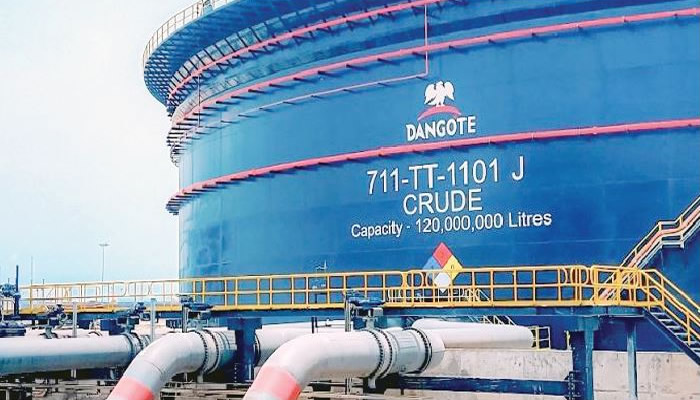
Sources from both the Nigerian National Petroleum Company (NNPC) and Dangote Refinery confirmed on Tuesday that no agreement has been reached regarding the quantity and pricing of petrol (PMS) to be lifted by NNPC.
On September 5, 2024, NNPC’s Executive Vice President of Downstream, Adedapo Segun, announced that the company would begin lifting petrol from Dangote Refinery on September 15. He noted that the price of petrol would be influenced by foreign exchange rates and market dynamics due to the deregulated nature of the market.
However, as of Tuesday, government insiders revealed that no formal agreements or paperwork had been completed for the lifting of petrol from Dangote’s $20 billion refinery. The necessary terms and conditions for the deal remain unresolved, raising concerns that NNPC might not commence lifting on the scheduled date.
A senior Dangote refinery official, who spoke anonymously, indicated that no discussions on pricing or other details had been finalized. “Currently, no documentation from NNPC or the Nigerian Midstream and Downstream Petroleum Regulatory Authority (NMDPRA) has been received regarding the product lifting. There has been no formal notification about picking up PMS on September 15,” the source said. The process for lifting the product would involve similar procedures as other imports, including terminal storage and distribution.
A Federal Ministry of Petroleum Resources official echoed this uncertainty, stating that no concrete agreements had been made yet, but ongoing discussions are expected to address the issue.
Dan Kunle, a business adviser in the oil and gas sector, has called for intervention from President Bola Tinubu to address the supply concerns and their impact on the socioeconomic climate in Nigeria.
The NNPC spokesperson, Olufemi Soneye, had not responded to inquiries by Tuesday night.
The Crude Oil Refiners Association of Nigeria (CORAN) noted that Dangote petrol could potentially be cheaper if the Federal Government provides the necessary concessions. CORAN’s Publicity Secretary, Eche Idoko, suggested that while he could not determine the exact price, government concessions should make the fuel less expensive. However, he warned that higher costs could result from more expensive crude procurement terms.
Idoko emphasized the need for a special pricing arrangement for locally refined products and urged the Federal Government’s committee on naira crude sales to produce a report. He also highlighted the importance of a balanced approach that supports both existing and new local refiners.
Discussions between Dangote and CORAN on pricing are planned, but no final agreements have been made yet. Idoko indicated that the refining sector is accustomed to such market fluctuations and that a broad, inclusive approach is necessary for fair decision-making.
Overall, CORAN advocates for decisions that benefit both Nigerian consumers and the local refining industry, rather than focusing solely on individual investors.