
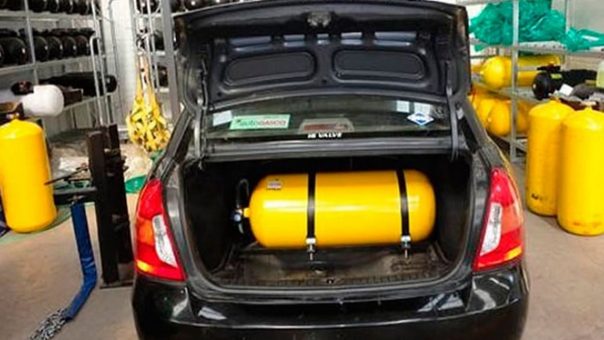
The Federal Government of Nigeria has invested over $450 million in the Compressed Natural Gas (CNG) sector, marking significant progress in its transition towards cleaner energy solutions, according to the Minister of Petroleum Resources (Gas), Ekperikpe Ekpo.
Speaking at the Practical Nigerian Content (PNC) Forum hosted by the Nigerian Content Development and Monitoring Board (NCDMB) in Bayelsa State, Ekpo highlighted CNG as a cornerstone of Nigeria’s energy transition plan. The initiative aligns with President Bola Tinubu’s push to shift from Premium Motor Spirit (PMS) to CNG-powered engines.
Key Investments and Achievements
The Federal Government has made strategic investments to scale the CNG industry, including:
- Infrastructure Development:
- 65 mother stations and 88 daughter stations are at varying stages of completion.
- 145 new conversion centers deployed, with an additional 90 under construction.
- Conversion Efforts:
- Acquisition of 150,000 CNG kits, enabling 34,000 vehicle conversions nationwide.
- Training over 1,000 conversion technicians to support the growing sector.
- Critical Supply Enhancements:
- Two major gas projects with a combined capacity of 600 million standard cubic feet per day (MMSCF/day) completed.
- Progress on critical pipeline projects such as the OB3 Gas Pipeline (97% complete) and the AKK Pipeline (77% complete).
Public-Private Partnerships
The Presidential CNG Initiative (PCNGI) has stimulated private sector involvement by addressing infrastructure and supply chain gaps. The government has also leveraged the Midstream and Downstream Gas Infrastructure Fund, investing N122 billion to empower six local companies in the gas value chain, reducing risks and fast-tracking project completion.
Economic and Environmental Impact
Ekpo emphasized that the ongoing developments will unlock vast opportunities for local businesses in areas like construction, maintenance, gas-to-power, and gas-to-fertilizer projects. He projected that Nigeria’s gas production could increase by nearly 4 billion cubic feet per day by 2030, with 25% of this target already achieved under the “Decade of Gas” plan.
Focus on Local Content
The Ministry is collaborating with the NCDMB to prioritize Nigerian companies in manufacturing components for pipelines, CNG facilities, and conversion centers. This approach aligns with broader goals to drive local capabilities, enhance energy security, and promote economic growth.
Ekpo described the progress as a reaffirmation of the government’s commitment to environmental sustainability, economic resilience, and fostering an inclusive energy transition.
This major investment underscores Nigeria’s strategic positioning in the global shift towards natural gas as a sustainable energy source while enhancing local economic development and reducing dependency on imported fuel.